Making grant funding accessible to farmers at scale, without the admin bottleneck for Soil Association
A multi‑step AI workflow turns unstructured funding pages into structured, standardised data ready to scale
A multi‑step AI workflow turns unstructured funding pages into structured, standardised data ready to scale
Challenge
Funding information lived in long, inconsistent public pages and had to be entered into the Webapp manually, making updates slow, inconsistent, and hard to scale to hundreds of funding schemes.
Approach
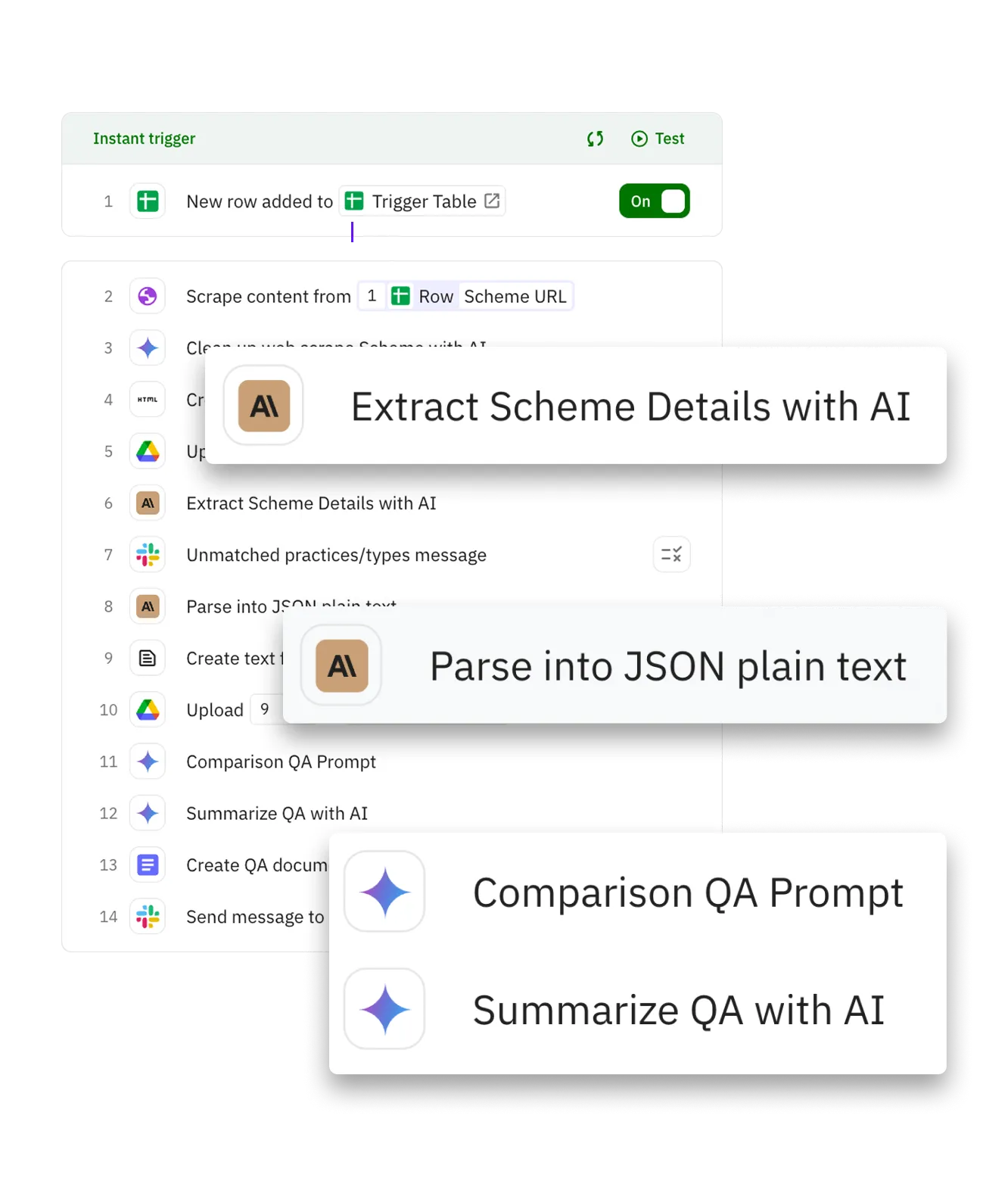
Designed a multi‑step AI agent workflow that scrapes, cleans, and structures scheme content into a standardised schema that can be ingested by the Soil Association Exchange platform.
Outcome
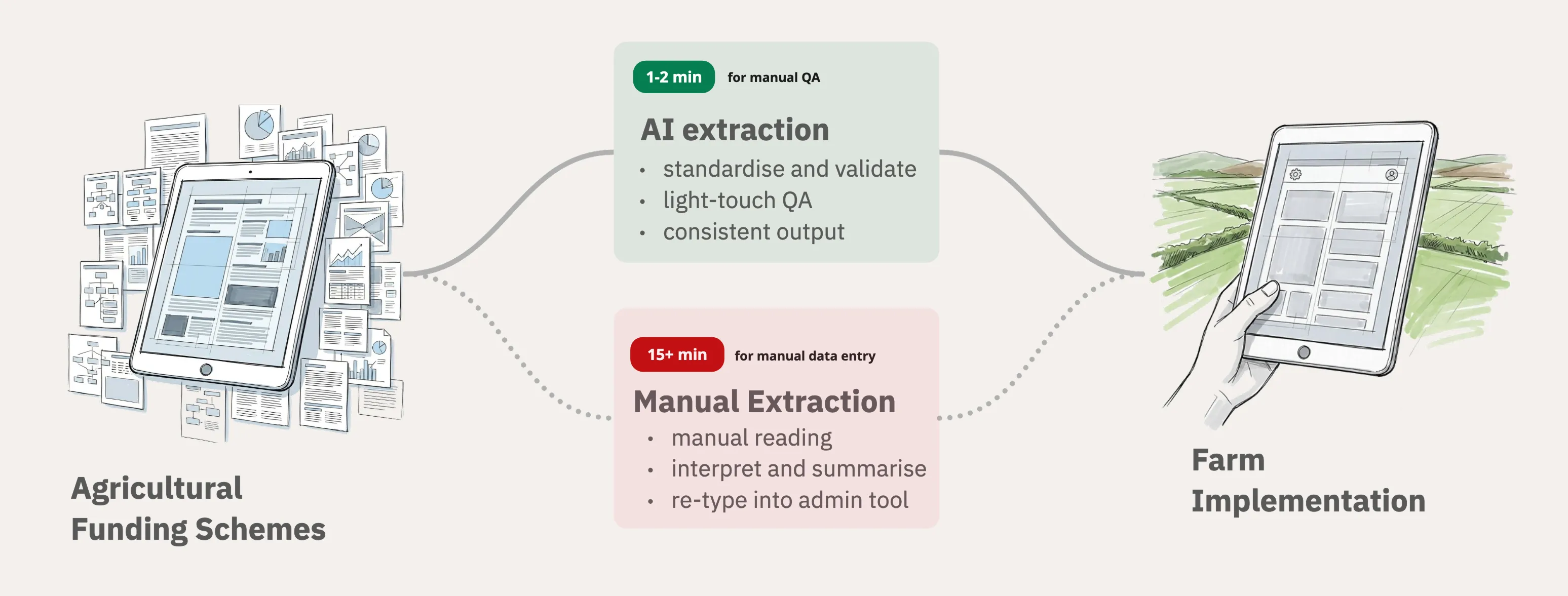
Reduced manual admin effort per scheme from an avg of 15 to 2 minutes and unlocked scale to import and update hundreds of schemes.
Context and problem
Manual scheme entry as a bottleneck
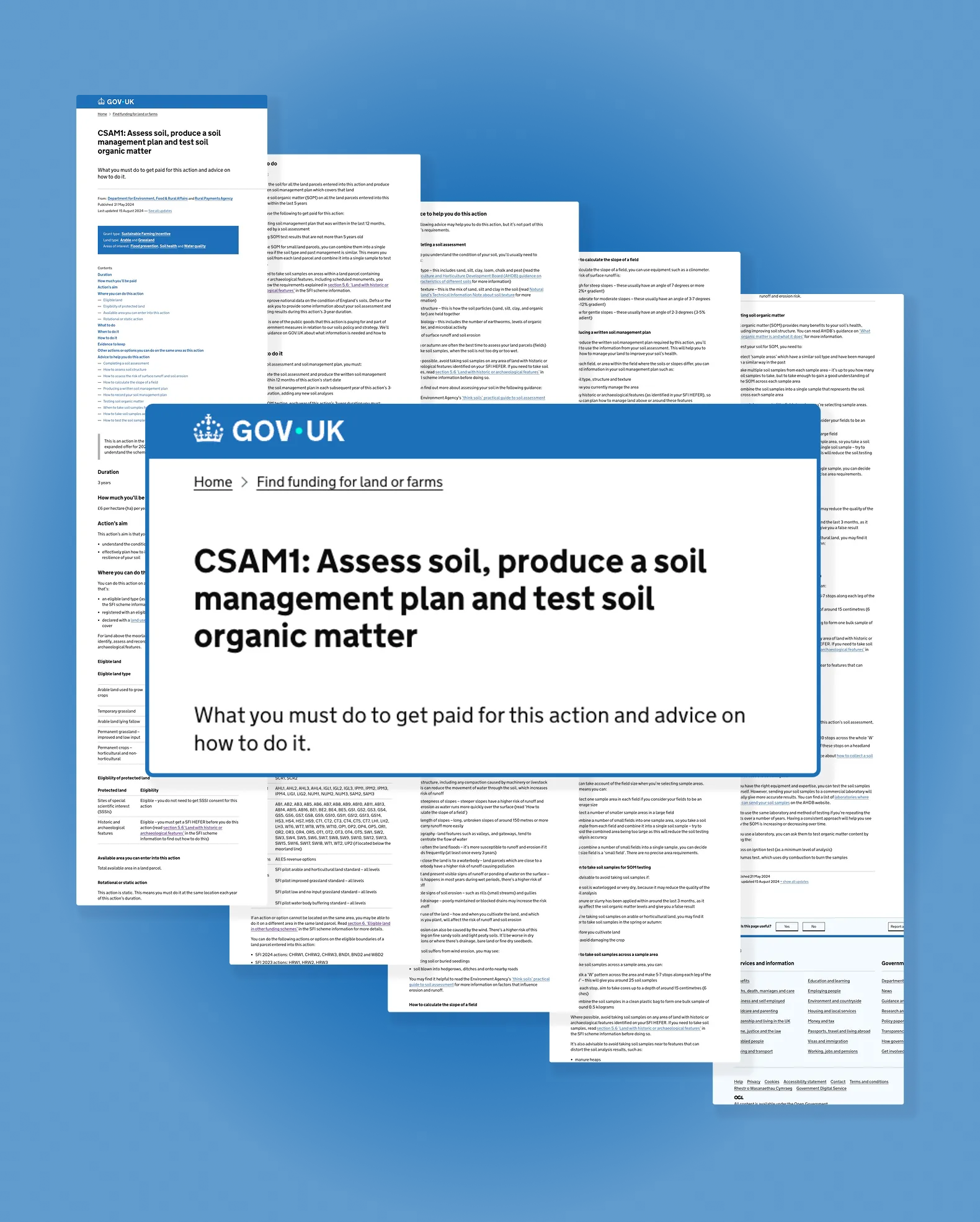
The Exchange platform connects sustainable farming practices to funding schemes like Sustainable Farming Initiative and Countryside Stewardship, but its Funding Tool depended on humans re‑typing complex policy pages into a rigid internal schema.
Historically, Soil Association staff and contractors manually identified relevant funding sources, read long description pages and entered key details into an internal admin tool, a process that took around 10–15 minutes per scheme and often required specialist agricultural knowledge, while producing non-standardised outcomes.
Approach and process
Designing an AI workflow
Three phases shaped the design work — understanding the existing process, defining the data model, and building and refining the pipeline.
Understanding the existing workflow
Mapping the manual process and working with product and engineering to understand exactly what the Funding Tool could ingest, from required fields to standard value lists and formatting constraints.
Designing the extraction schema and prompts
Narrowed the initial field model to an app-optimised set matching what the frontend already used, while keeping a richer model in view for future iterations.
Designing and refining the workflow
Built a multi-step AI pipeline in Relay that scraped source pages, extracted structured field groups into strict JSON, and used QA steps to catch missing or inconsistent outputs before hand-off.
Process detail
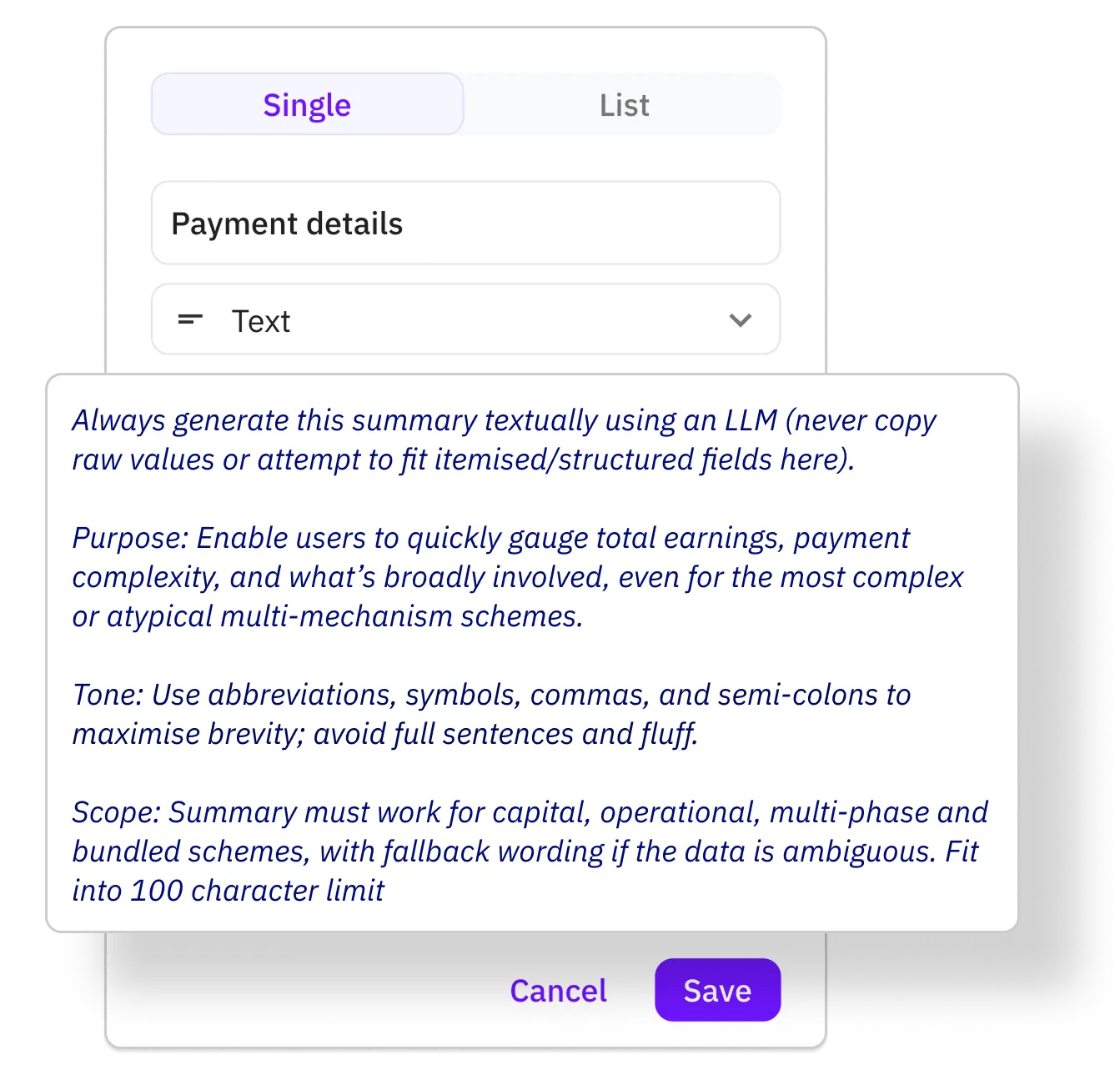
Structured prompt design
I designed prompts around each field group, using strict matching where the schema required it and flagging anything outside the taxonomy for review. Through testing and QA, I refined both the extraction prompts and checks over multiple iterations. Different models were used for different jobs, balancing reliability, cost and independent review.
Process detail
Targeted human review
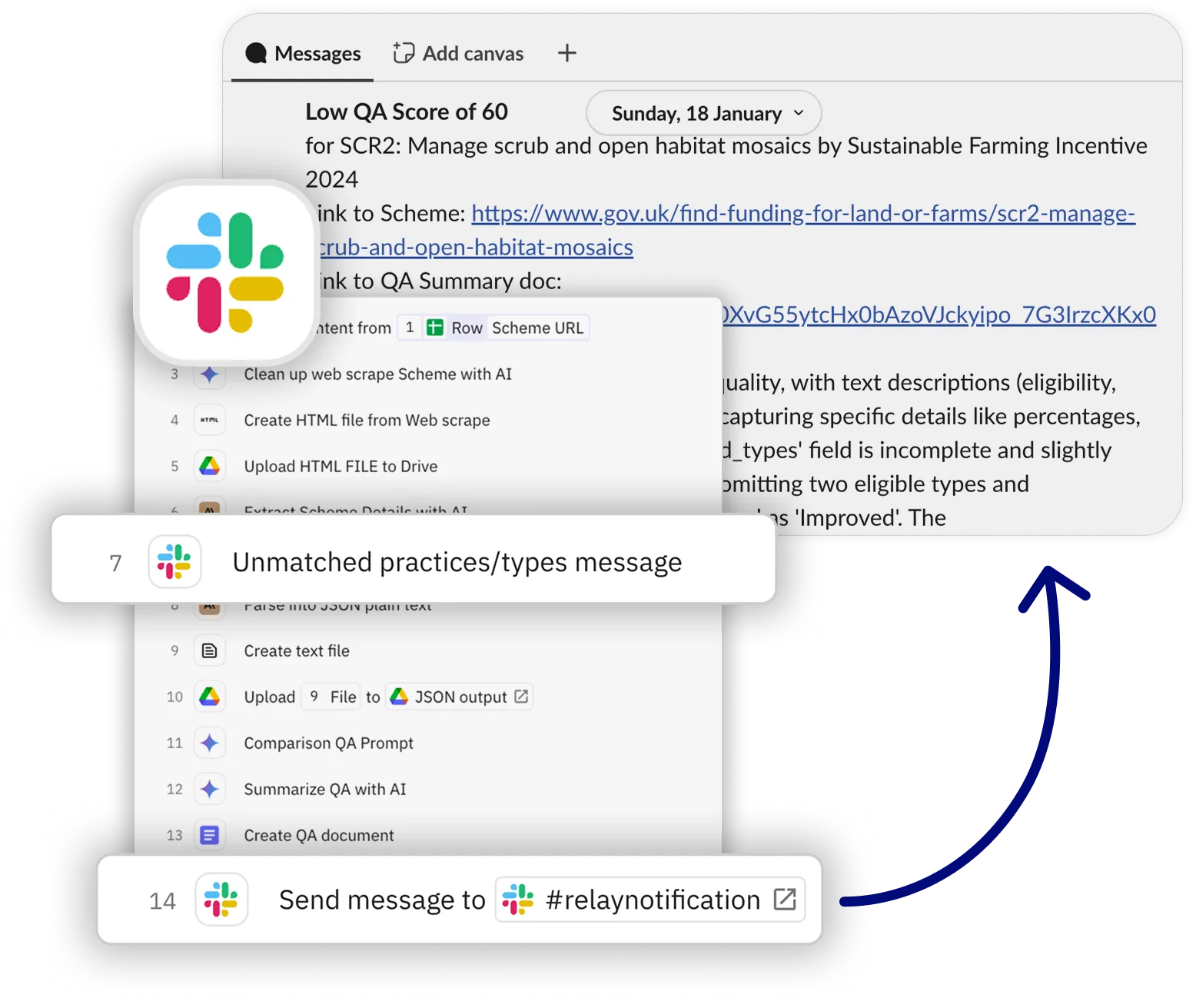
Human review only happens at defined points: when extraction confidence drops or when values fall outside the expected taxonomy. Slack alerts guide reviewers to clear, human-readable artefacts they can review, edit and approve. This keeps oversight lightweight while helping the system adapt to new or unusual data.
Process detail
QA with confidence scoring
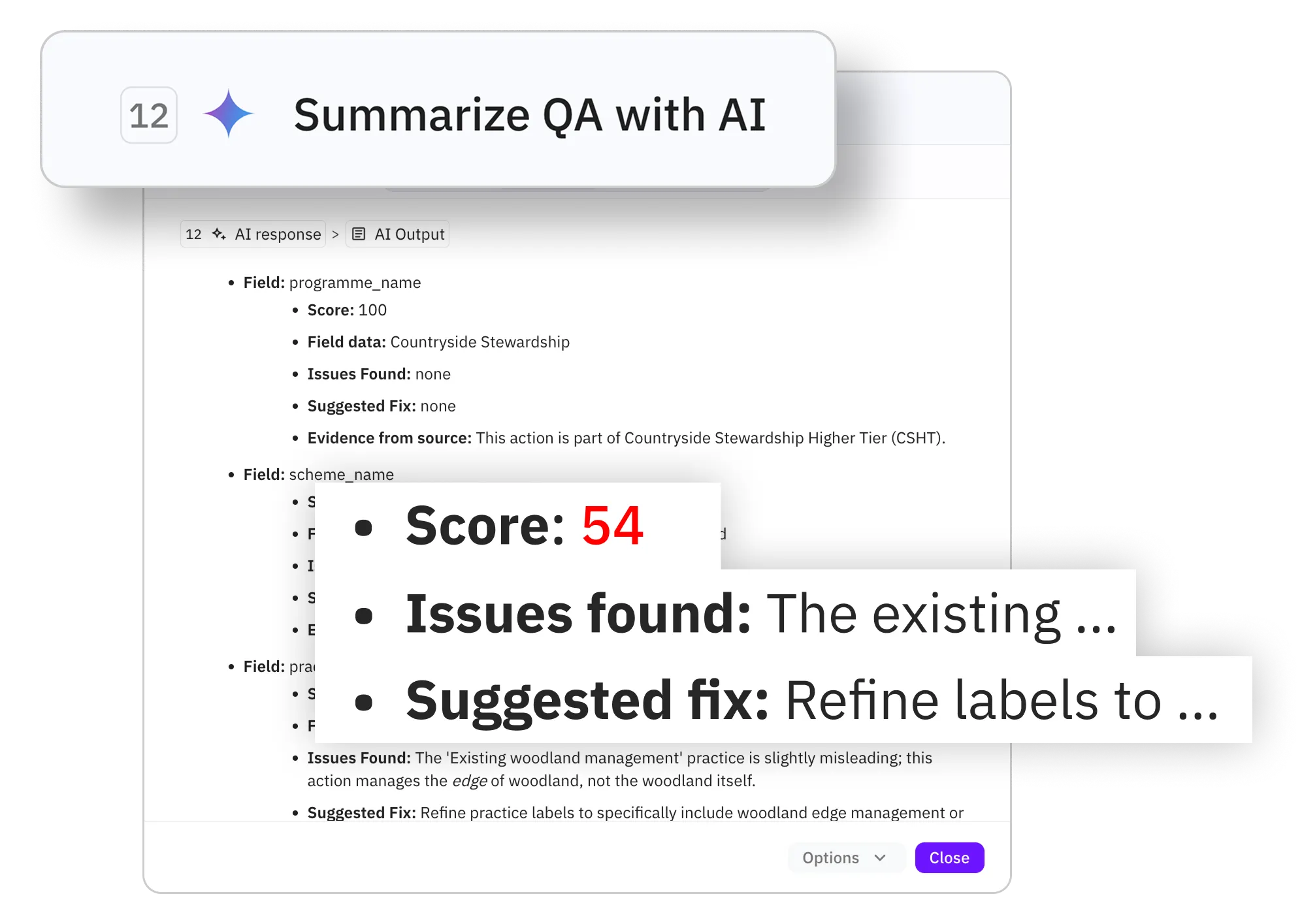
A scripted QA loop compares extracted fields against the original source, scores confidence and records issues with suggested fixes. It outputs both structured JSON and a readable QA document, and automatically triggers review when scores fall below a threshold.
Outcomes and impact
Faster updates, more consistent data
Replacing manual effort with structured automation — making scheme updates faster, more consistent, and ready to scale.
The workflow is designed to replace around 15 minutes of manual work per scheme with automated extraction plus light QA, making larger scheme updates far more practical for the team. It also standardises how key fields like payments, land types, practices and eligibility are captured, reducing variability between contributors and creating cleaner inputs for the Funding Tool. Because outputs are already aligned to the backend schema, the work also gives Soil Association a clearer route to scaling scheme coverage without rebuilding the process from scratch.
Role
AI Workflow Designer
Scope
Workflow design, prompt engineering, schema design, QA system
Collaborators
Soil Association product and engineering team
Status
Delivered — Soil Association Exchange