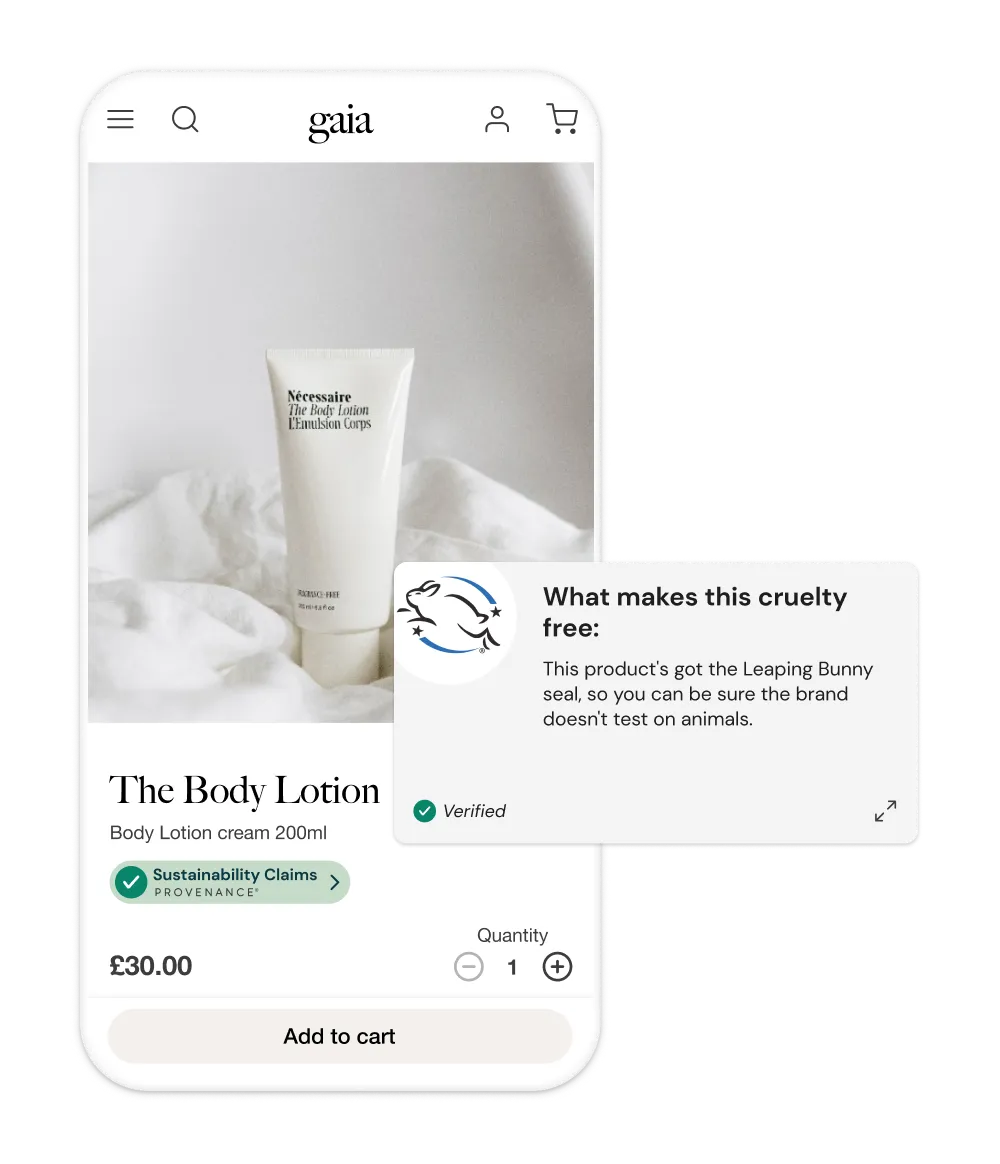
Making product-page sustainability claims twice as engaging
A mobile-first redesign of Provenance's independently reviewed ecommerce embeds
Provenance's mission is to help more sustainable products succeed in the market by providing shoppers with independently verified sustainability information at point of sale. I redesigned the mobile experience to make these Proof Points easier to scan, tap, and explore.
Challenge
On mobile, product‑page Proof Points were easy to miss and hard to interpret, so even strong brand sustainability efforts failed to catch attention or guide shoppers' choices.
Approach
I audited the existing claims, then ran design‑sprint workshops, extensive design iterations, user research, A/B testing, and customer conversations to converge on a clearer, mobile‑first pattern.
Outcome
Provenance's new mobile‑first design more than doubled how often shoppers interacted with a Proof Point to explore a claim, giving Provenance a stronger chance to nudge shoppers toward the more sustainable option.
Challenge
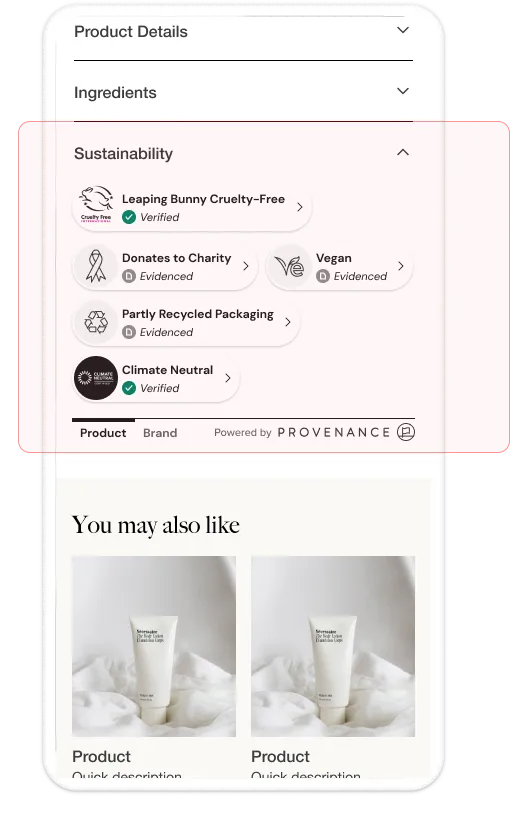
UX challenge
Desktop‑first claims in a mobile‑first world
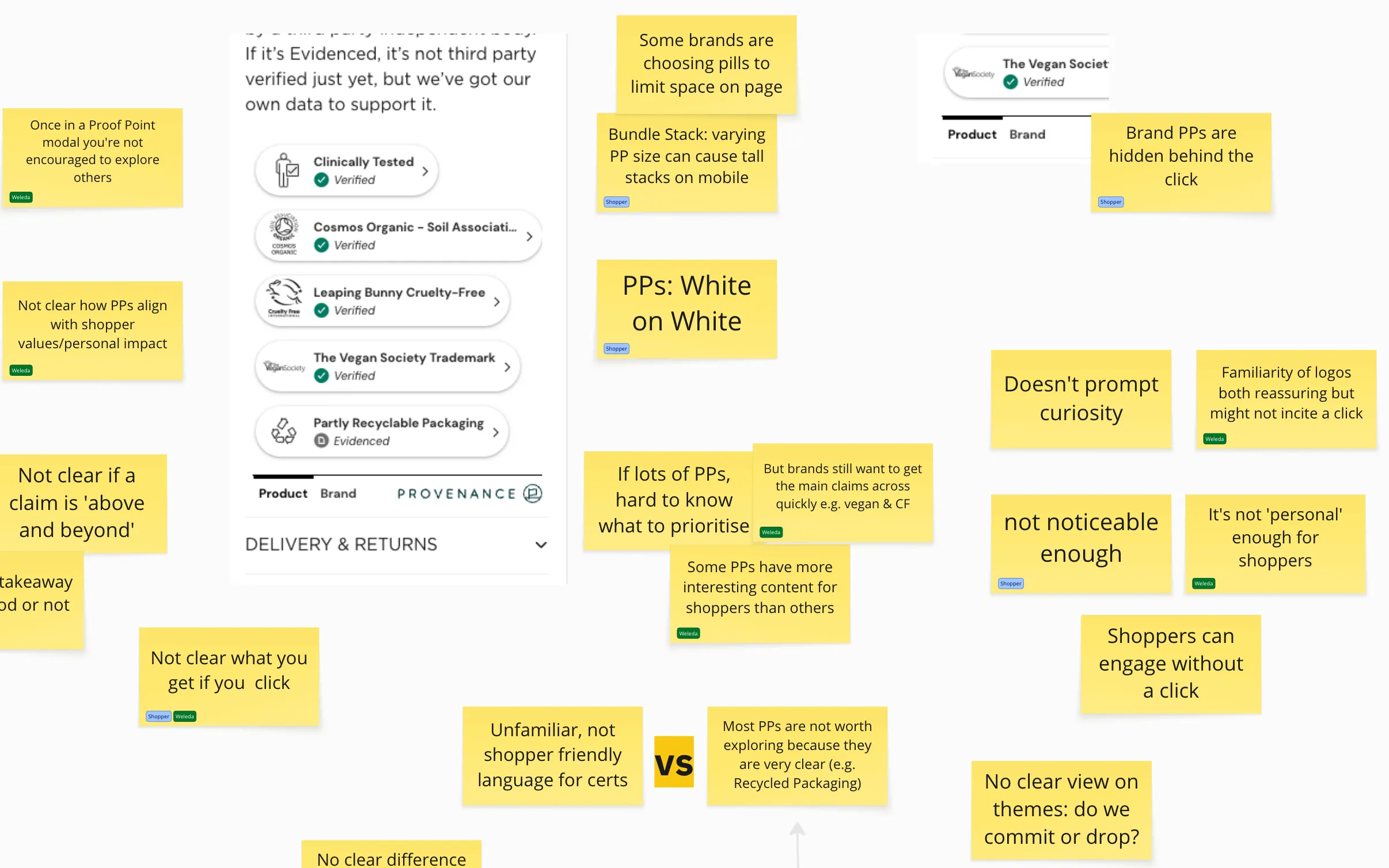
Provenance’s existing product‑page Proof Points were designed primarily for desktop, when now about two-thirds of ecommerce traffic typically now happens on mobile. On smaller screens, the claims were easy to overlook: they often appeared as white‑on‑white pills, stacked awkwardly the more claims a product had, and they were frequently hidden behind expandable sections instead of being visible at a glance.
The experience also lacked familiar mobile interactions like swiping, and the language and structure made it hard for shoppers to see which claims were “above and beyond,” what matched their values, or whether a product was meaningfully better than alternatives.
Approach
Collaborative design sprint
Co‑creating stronger mobile claim patterns in a one‑day sprint
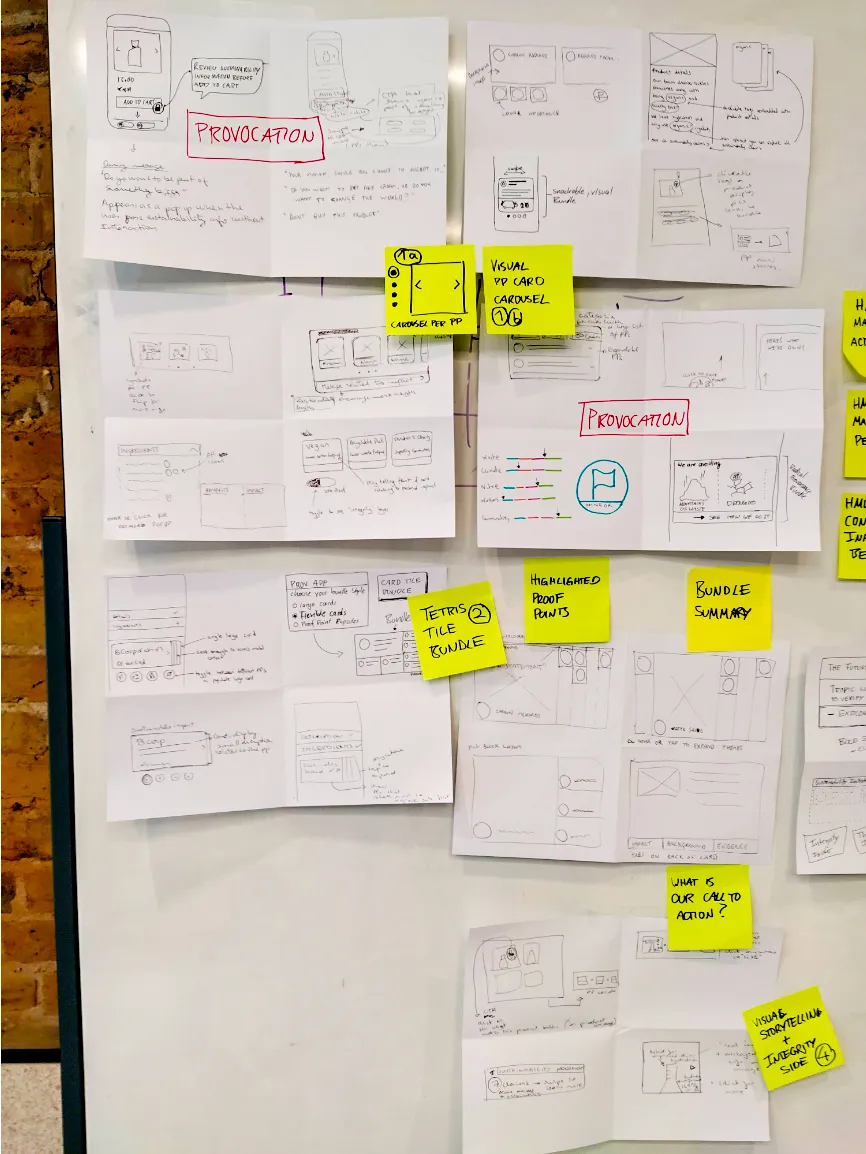
I translated the Proof Point issues into “How might we…?” statements and used them to kick off a GV‑inspired design sprint with stakeholders from product, customer success, and engineering.
Over the day we moved from rapid sketching to concept development and a super‑vote, then turned the strongest directions into concrete design options: new layouts, interaction patterns, and levels of visual emphasis, that met our criteria on clarity, performance, and third‑party trust, ready to test with shoppers.
Design Iterations
Finding the right balance between visibility and brand fit
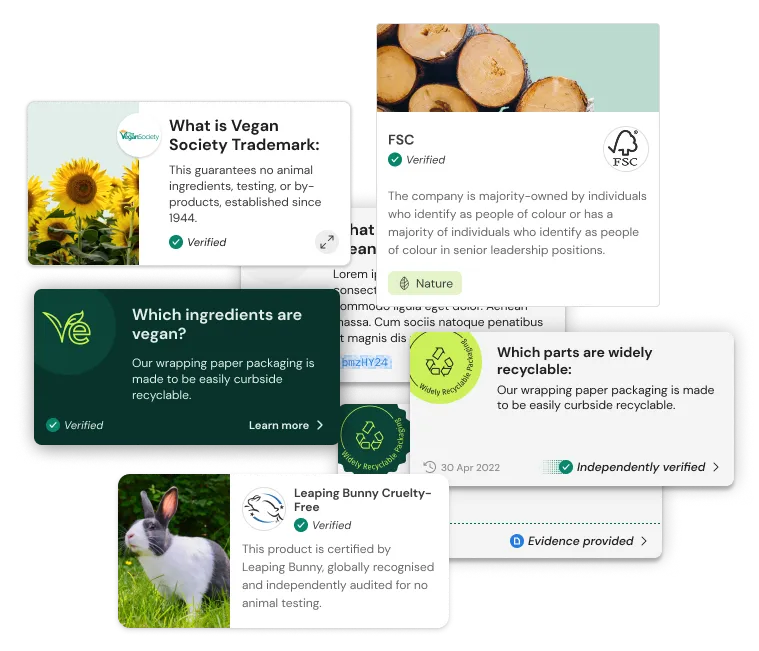
We explored more visual, image‑led cards, but they proved too expensive to scale, too opinionated for many claims, and often clashed with brands’ own styling on product pages.
Through multiple rounds of iteration, we pulled back from heavy illustration and refined a pattern that draws attention on mobile without overpowering the brand or feeling out of place.
User research
Combining quick in‑context tests with larger‑scale validation
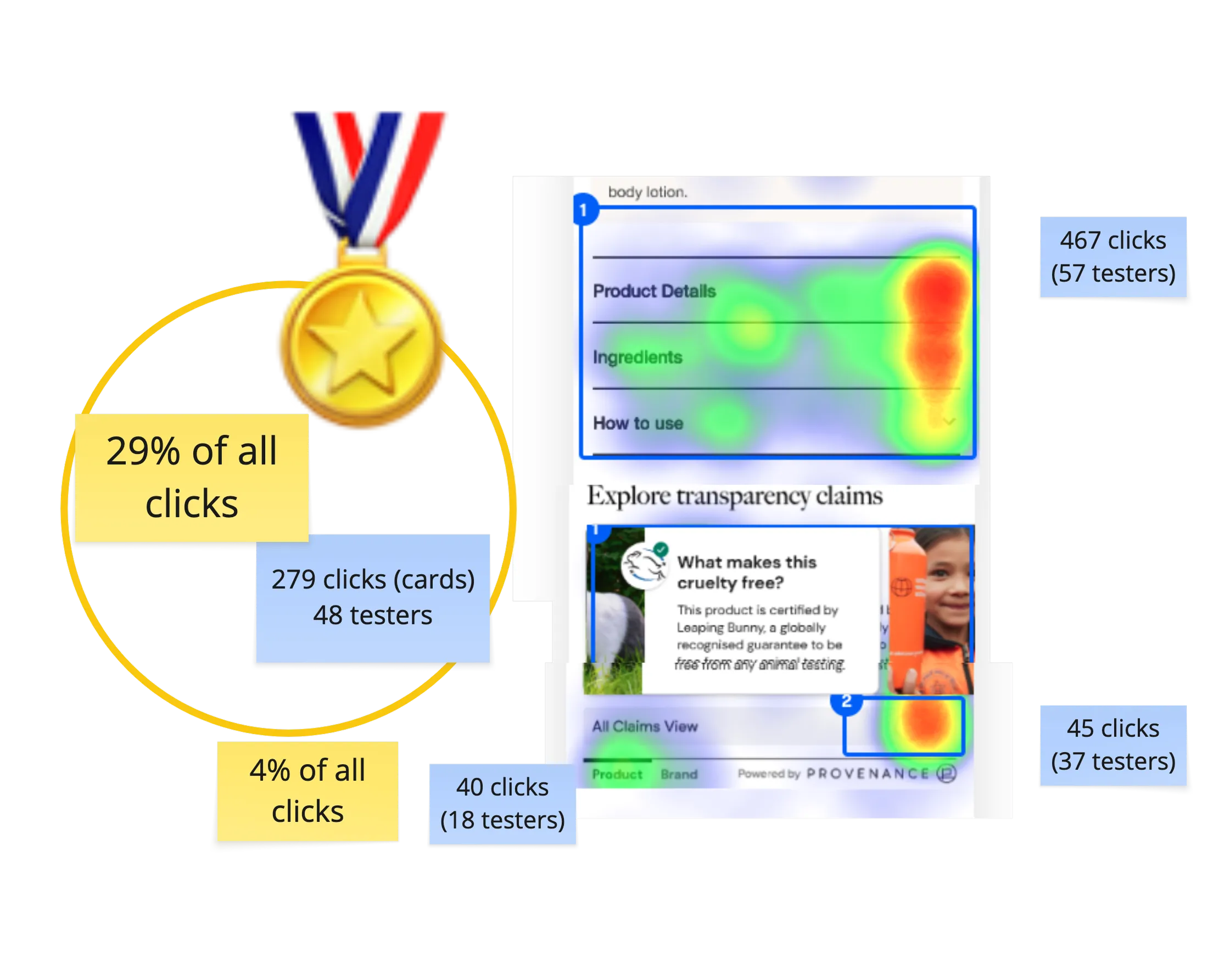
We first ran “Pret tests” with Pret a Manger shoppers to qualitatively stress‑test early Proof Point designs in context. Then, using Maze, we A/B‑tested the existing bundle (Group A) against the new engagement bundle (Group B) with 100+ participants, comparing click distribution, dwell time, and understanding of the widget’s purpose to see whether the new pattern actually caused more people to pause, interact, and remember the claims.
Outcome
Shopper and customer impact
Increasing engagement and strengthening the offer to brands
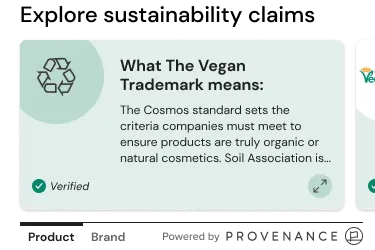
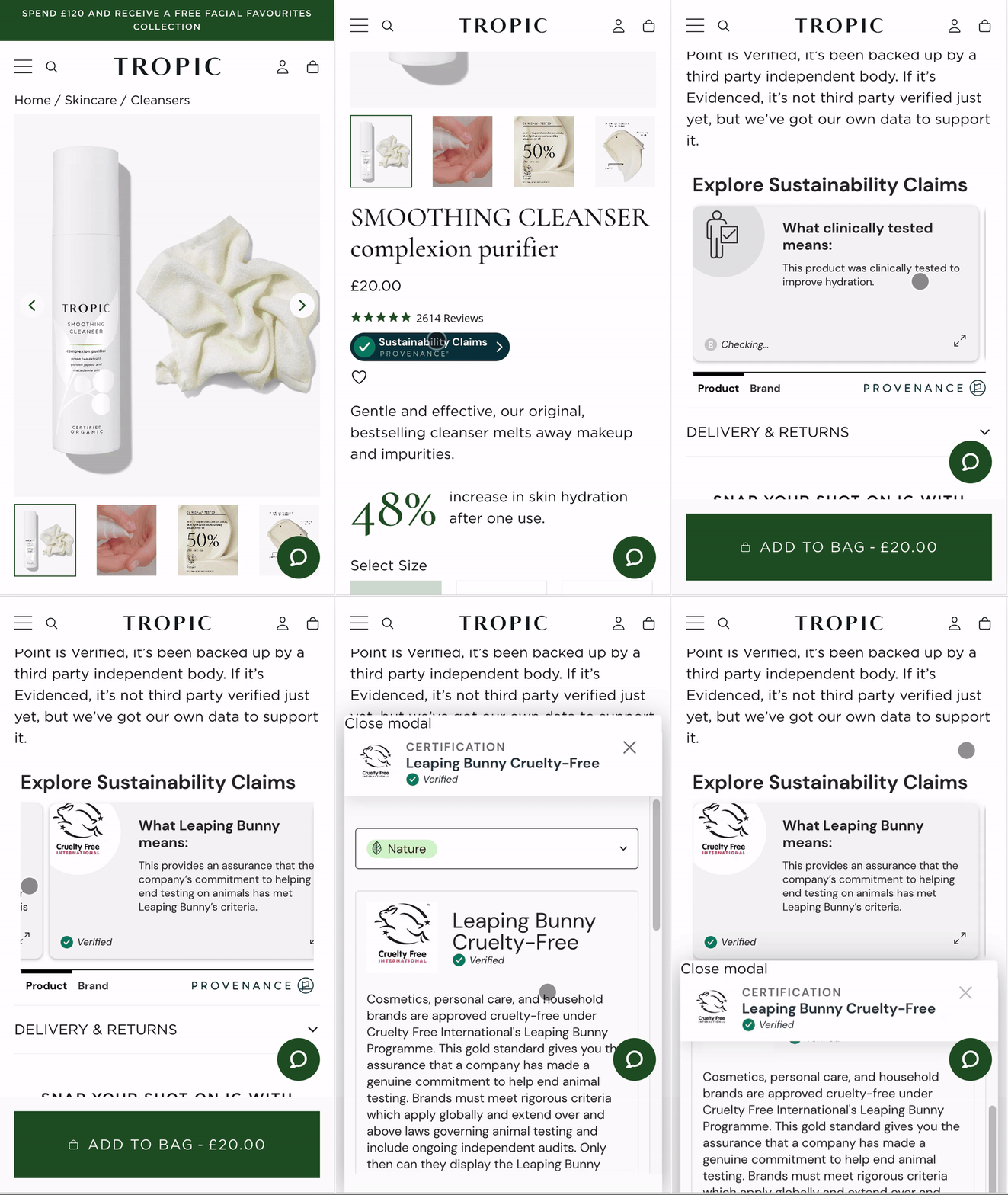
We rolled the new mobile‑first sustainability claim experience out with early beauty customers, including Tropic Skincare, and saw Element Click Rate, the core measure of engagement with the widget, increase by 120% as shoppers interacted with a Proof Point (swiping, tapping, and exploring a claim) far more often than before.
This increased interaction with sustainability content gave Provenance a stronger story for brand customers: their verified claims were not only present on the page, but measurably more likely to be noticed and explored.
Role
Lead product designer (end‑to‑end discovery and design)
Scope
Research, problem framing, design sprint facilitation, wireframing, user testing, and interaction design for product‑page sustainability claims
Collaborators
Product Manager, UI Designer, Software Engineer
Status
Live feature embedded in Provenance clients' ecommerce sites